
 Business
Muslim American business: products, customers, and opportunity
Five stories of Muslim American enterprise, from automotive manufacturing to clothing, jewelry, homewares, and founder networks.
How Shahid Khan’s Illinois engineering career and automotive component business became part of American manufacturing.
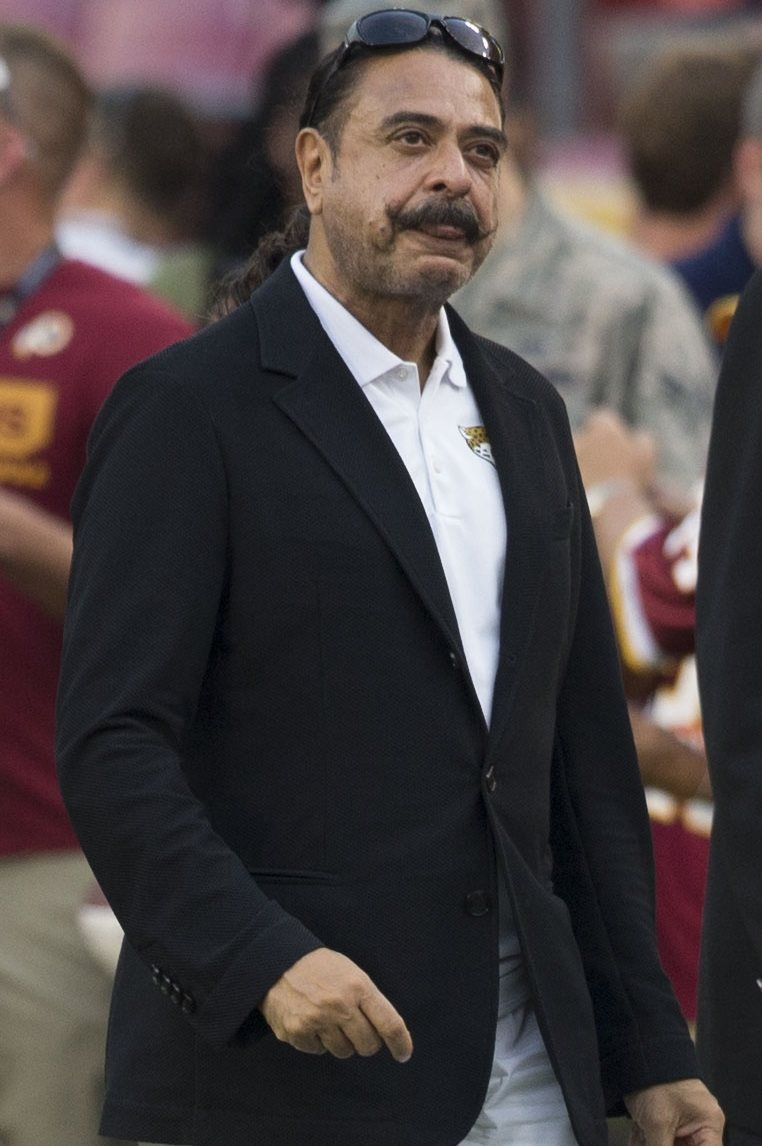
A truck bumper is a useful place to begin Shahid Khan's American business story. It moves attention from a familiar football owner to a less visible kind of work: making a component that another company needs to assemble a vehicle. Khan's career connects an engineering education in Illinois, factory experience, product design, and ownership of an automotive supplier. That sequence gives readers something more concrete than a billionaire ranking.
Khan explicitly identified himself as Muslim in a December 2011 interview published by the Jacksonville Jaguars. We use that public statement rather than making an assumption from his name or Pakistani background. His religious identity establishes why his story belongs in this collection; it does not explain every engineering or business decision he made. Jaguars interview
The University of Illinois engineering alumni record identifies Khan's degree as a 1971 bachelor's in industrial engineering. It describes him working at Flex-N-Gate while a student, then becoming chief engineer during the 1970s. This matters because the business story begins inside an operating manufacturer. He had a chance to learn about a component, the process that made it, and the customers who bought it before becoming the owner.
The university's account credits his Bumper Works venture with a one-piece metal bumper design that avoided welded joints vulnerable to rust. It records his acquisition of Flex-N-Gate in 1980. The same page labels its information current as of 2006, so its plant and employment totals cannot responsibly become present-day statistics. Illinois alumni record
A manufacturing contribution can be difficult to see from outside the factory. The finished vehicle carries an automaker's name, while the firms responsible for individual components remain unfamiliar. Following a bumper reverses that view. It asks readers to notice a supplier's design work as part of an American industrial product, rather than treating the owner only as someone who later purchased a prominent asset.
There is a difference between making an interesting prototype and supplying a component repeatedly. A prototype shows that an idea can work once. A supplier must make the result dependable enough for another company's production. The historical record of Khan's move from employee to entrepreneur to company owner offers a way to discuss that difference without claiming access to private contracts or factory accounts.
For a student, this is a useful case study in how engineering and operations meet. Ask what changed in the component, which manufacturing step the change affected, and what the buyer would need to know before adopting it.
Nor should a reader confuse company ownership with solitary invention. Factories depend on production workers, engineers, supervisors, maintenance crews, logistics teams, and purchasing relationships. A founder's biography can identify an important decision while leaving most of that collective labor outside the frame. Keeping the wider workforce visible makes the contribution story more credible.
In the Jaguars' 2011 interview, Khan spoke about the responsibilities of owning a team and its relationship with Jacksonville. The interview took place as the ownership transition approached. It is useful evidence of what he said at that moment, not a retrospective verdict on how every subsequent decision worked out.
The change in public visibility is striking. A component supplier can affect products used across the country without becoming a household name. A professional sports owner becomes associated with a city, supporters, a stadium, and highly visible results. The same person occupies two different kinds of economic role, and each calls for different evidence when assessing a contribution.
Readers interested in the sports side should distinguish a team transaction from an improvement in community welfare. Ownership is an established event; claims about a project's net benefit require scrutiny of costs, employment, financing, and who receives the gains.
The strongest supported claim is that Khan helped build an automotive manufacturing enterprise after training and working in Illinois. That is a concrete place in American industrial history. It sits alongside, but is different from, the consumer-facing work of Haute Hijab or Nominal. Those firms make their brand visible to the buyer; a supplier's contribution may be hidden inside another brand's product.
For further research, begin with the dated university profile and the contemporary interview, then ask for evidence suited to the question. A technical history needs design and production records. A workforce history needs worker accounts and employment records. A civic history needs local reporting and public documents. Reading across those categories prevents an appealing founder story from becoming an all-purpose assessment of a company.
Return to Muslim American business and the economy to compare the different ways a business can matter: a component supplied, a customer recognized, or a door opened for another founder. Khan's place here rests on a specific industrial career, not on a claim that all entrepreneurship automatically benefits everyone.
BusinessFive stories of Muslim American enterprise, from automotive manufacturing to clothing, jewelry, homewares, and founder networks.