 Art
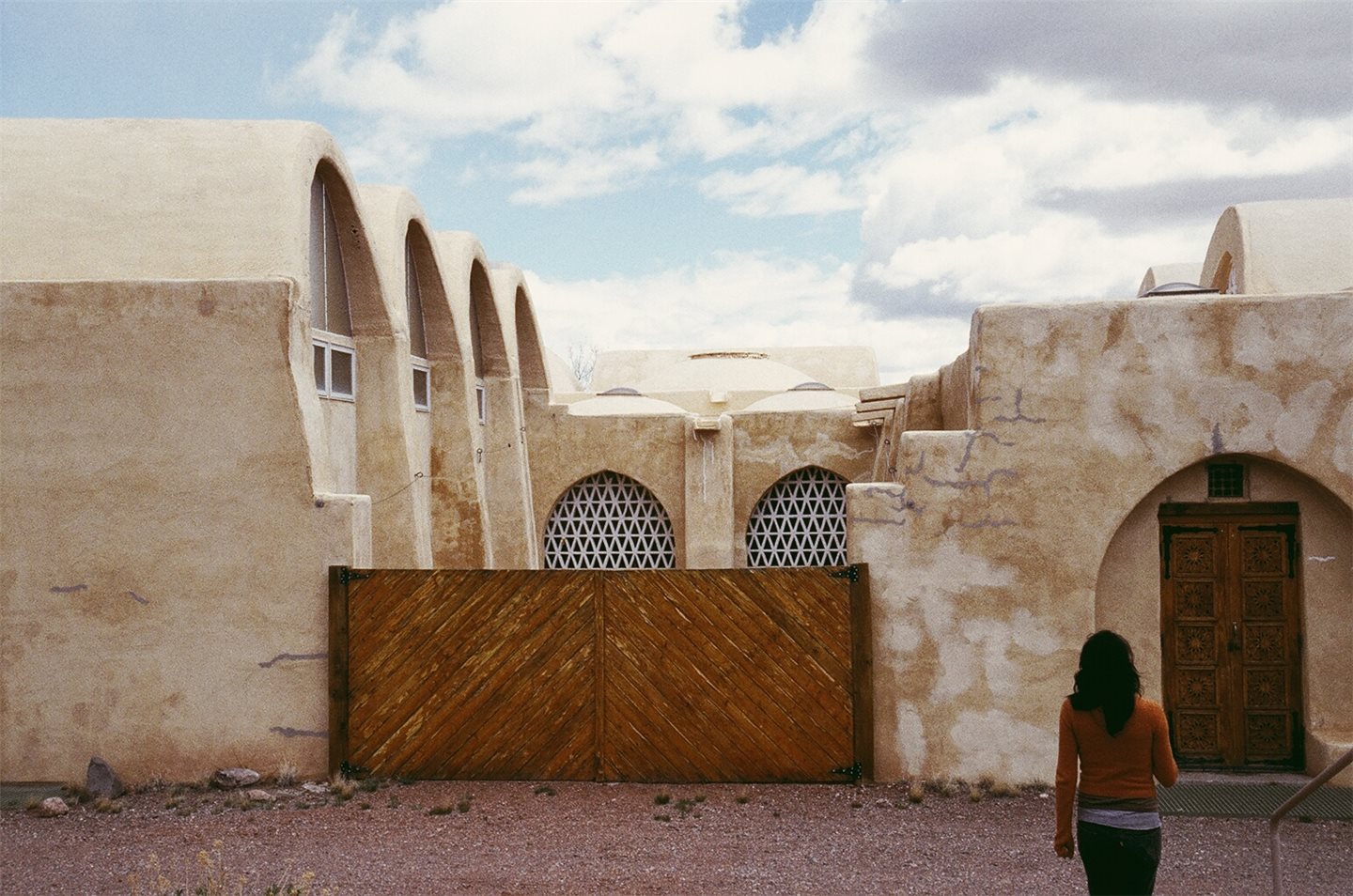
Dar al-Islam and the adobe architecture of Abiquiu
Hassan Fathy’s New Mexico mosque connects Muslim community-building, earthen construction, and a changing vision for life in the American Southwest.
Explore five connected stories: an adobe mosque, contemporary animation, a Houston arts society, wall art, and a California scarf brand.
ArtHassan Fathy’s New Mexico mosque connects Muslim community-building, earthen construction, and a changing vision for life in the American Southwest.
A Houston arts organization connects living artists, museum collections, and hands-on learning through documented community partnerships.
An artist’s route from Lahore to Rhode Island and New York connects detailed painting, animation, and questions about who belongs in American art.
How Syed Rahman's documented business story connects metalwork, home interiors, and Muslim American customers.
Read the Atik sisters' published account of building a scarf brand and responding to customer expectations.
A contribution to American art can be a work in a museum, but it can also be a building people use, a public demonstration, or an object chosen for a home. Muslim participation in American visual culture becomes easier to see when those different settings are placed beside one another. The stories in this collection move from New Mexico to Houston, from contemporary art to the practical decisions behind a scarf or a piece of wall art.
There is no single Muslim American aesthetic. A maker's background may shape a subject, a material, or the audience they know best. It does not dictate what the finished work must look like. These five stories offer specific entry points into a much larger field, with room for both individual artists and the people who make cultural encounters possible.
Dar al-Islam in Abiquiu brings Egyptian architect Hassan Fathy's work into the landscape of northern New Mexico. The mosque and educational complex emerged from an ambitious community project. Earthen construction connected the undertaking with a material already familiar in the Southwest, while the project also involved knowledge carried by designers and builders from elsewhere.
Its story is about adaptation as much as appearance. A drawing proposes a future; a building has to accommodate materials, regulations, money, and use. The campus also changed as its institutional purpose evolved. Studying that change makes the site part of a living American architectural history, rather than an isolated example of a foreign style.
Begin with the photographs and drawings in the architectural record, then read the institution's own account of the campus. Look for the relationship between a gathering space and the routes that lead to it. The useful question is how people inhabit the design: where they enter, where they pause, and how a group moves from one activity to another.
This approach also keeps workers and users in view. The person whose name appears on a plan is important, but building knowledge has to be practiced by others. A campus acquires further meaning through the people who maintain and use it over time.
Shahzia Sikander offers another encounter between a precise inherited practice and new possibilities. Her work moves among painting, installation, and animation. Training in manuscript painting becomes a resource for testing the frame, the figure, and the scale of an image.
A useful example is The Last Post, an animation acquired by the Smithsonian American Art Museum. Its presence in an American collection makes the contribution tangible: there is a particular work, with a title, medium, collaborators, and an institutional record. It can be examined rather than reduced to a claim that an artist represents a culture.
Moving images ask something different of a viewer from a still reproduction. Duration, sound, and transformation matter. An element seen at one moment can acquire another meaning later. When you explore Sikander's work, give one change your attention: a shape moving away from its setting, a border becoming unstable, or sound changing the mood of an image.
The artist's public discussion of her Muslim identity is part of the record, but it is not a key that unlocks every motif. Artistic practice can draw on several histories at once. That complexity is one reason to spend time with the work itself.
Houston's Islamic Arts Society shows a contribution made through organizing. Its documented partnership with the Museum of Fine Arts, Houston connects living practice with a collection of historical objects. Public activities have included opportunities to encounter calligraphy, ceramic painting, and paper marbling.
The difference between seeing a finished object and watching a process is substantial. A pattern that looks effortless from a distance may depend on repeated decisions and years of practice. A demonstration makes some of that labor visible. It can also invite questions that a label on a wall cannot anticipate.
An organization contributes by making those encounters happen: finding a setting, bringing participants together, and creating a route for an audience to enter. That work belongs in a history of art even when it does not produce a collectible object. It helps determine which practices a city can encounter in public.
Islamic art is a field of study and practice, not a way to assign religion to every participant. Artists and audiences may have many backgrounds. The society's story is especially useful because it makes room for a shared activity without requiring everyone in the room to have the same reason for attending.
Syed Rahman's Modern Wall Art brings the discussion into homes and small-business practice. A piece of calligraphy has an inscription, but it also has dimensions, material, finish, weight, and a mounting method. Design has to account for both the cultural reference and the object a customer will actually receive.
This is a different scale of contribution from a museum acquisition, and it deserves its own vocabulary. A product can help a person make a room feel more personal. It can also give a maker work and require collaboration around fabrication, photography, packaging, and customer communication.
Look at how the object is explained. Can a buyer understand its size from the listing? Is the wording identified? Does a photograph show the finish as well as the overall silhouette? These questions connect visual culture to everyday use. They also reveal why a well-designed object needs more than an attractive promotional image.
VELA's founders, sisters Marwa Atik and Tasneem Atik Sabri, provide a story about textiles, customers, and production. Their public materials discuss sizing, cultural references, and the difficulty of keeping a repeated product consistent as a business grows.
A scarf is easy to flatten into a symbol. Looking at it as design brings other questions forward: how it falls, what dimensions a wearer needs, how a print changes at different scales, and whether a new batch feels like an earlier one. Those details give wearers a role as people with preferences and routines, rather than an audience whose tastes can be assumed.
The company's account of quality concerns is also part of the business story. Design continues after the first successful sample. Production and explanation determine whether the intended object reaches the customer. American fashion includes that patient operational work alongside the visible collection launch.
The five routes can be read in any order. Follow earth and space through Abiquiu, line and movement through Sikander, public learning through Houston, or the relationship between an object and its user through the two businesses. A student might compare how a cultural reference changes when it moves from a museum to a home. A maker might follow the less visible tasks that support the finished work.
The collection does not ask every contribution to prove the same kind of benefit. A building provides space; an artwork opens a way of seeing; a public program creates an encounter; a business develops an object for use. Taken together, these stories show Muslim Americans participating in the making of the country's surroundings and cultural choices. The next step is to look closely at a particular place or work, where the broad story becomes something you can actually see.
ArtHassan Fathy’s New Mexico mosque connects Muslim community-building, earthen construction, and a changing vision for life in the American Southwest.
A Houston arts organization connects living artists, museum collections, and hands-on learning through documented community partnerships.
An artist’s route from Lahore to Rhode Island and New York connects detailed painting, animation, and questions about who belongs in American art.