 Art
A First Visit to Islamic Art at The Met
A first-visit route through the Damascus Room, Moroccan court, and Garden Gathering, with admission and accessible-entry information.
How carpet exhibitions, collectors' gifts, manuscript acquisitions, and changing gallery installations shaped the Met's Islamic collection.
The Metropolitan Museum of Art's Islamic collection is also a history of American taste. Its galleries contain objects made across many centuries and regions, but the decision to collect, classify, and display them happened through particular people and institutions in New York. Understanding that second history changes what a museum visit can reveal.
The collection now extends from the seventh century into the twenty-first and across a vast geography. The department's overview describes more than 15,000 objects, encompassing far more than objects created for worship. Ceramics, textiles, metalwork, manuscripts, and architectural elements connect religious settings with courts, households, workshops, and markets.
The museum began acquiring Islamic works in the nineteenth century. Its educator resources identify acquisitions beginning in 1891. At that stage, the objects did not enter an institution with the same departmental structure or gallery arrangement visitors encounter today.
A major early moment came in 1910 with an exhibition of oriental rugs. It brought together forty-nine carpets from twelve lenders. The exhibition was organized during Wilhelm Valentiner's work at the museum, following the establishment of a decorative arts department in 1907. The Met's history of its displays shows how carpets helped bring this material into public view.
Loans and private collecting shaped what audiences could see. A museum exhibition depended partly on what collectors owned and were willing to lend. Their preferences could elevate particular media or periods. The resulting presentation was therefore both an account of distant artistic traditions and a reflection of contemporary American collecting.
The museum's 2011 exhibition The Making of a Collection examined the people and acquisitions behind the holdings. Its exhibition account highlights the role of collectors and donors, including James F. Ballard's contributions to the carpet collection.
The importance of a gift is not only numerical. A group of carpets can make it possible to compare regional styles or techniques. A manuscript acquisition can transform the range of painting available for study. Donors help determine which comparisons a museum can offer and which gaps remain.
Two major manuscript acquisitions illustrate the point. In 1955 the museum purchased thirty-nine leaves from the Shah Jahan Album. In 1970 Arthur A. Houghton Jr. donated seventy-six folios containing seventy-eight illustrations from the Shahnama made for Shah Tahmasp. These additions changed the possibilities for displaying Persianate and Mughal painting in New York.
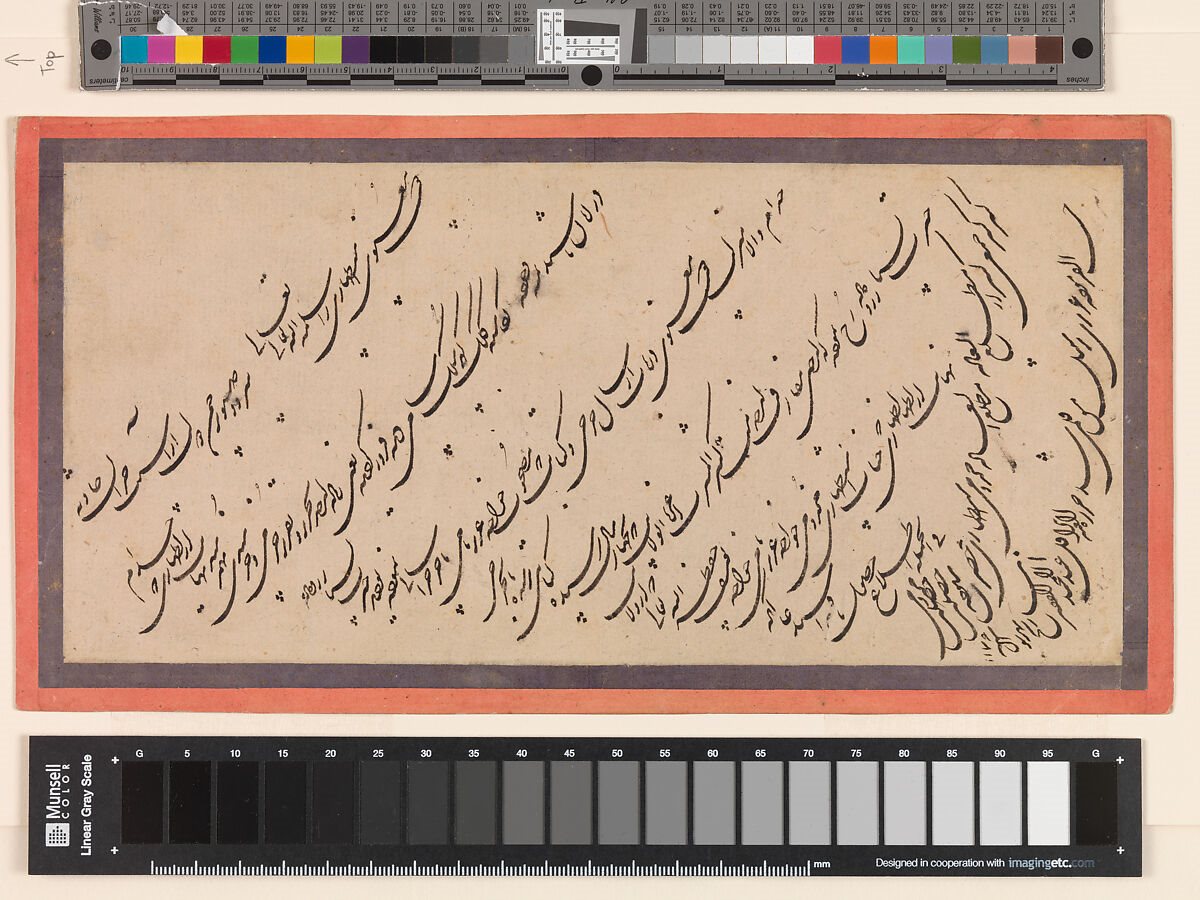
Detached manuscript leaves also pose an interpretive challenge. A page on a gallery wall was once part of a sequence, binding, or album. Its beauty remains visible, but its original relationship to other pages may require explanation. Digital presentation and scholarship can help reconstruct connections that a single framed leaf cannot show.
In 1965 the Met had a single gallery devoted to Islamic art. The 1975 installation expanded the presentation to ten galleries. Those changes made more works visible and gave the collection a stronger architectural presence within the museum.
The Damascus Room offers an especially tangible example. Acquired in 1970 in hundreds of components, it was assembled for the 1975 galleries and moved again for the installation opened in 2011. It presents an interior rather than an isolated object, encouraging visitors to think about scale, surfaces, and the experience of inhabiting a decorated room.
A reconstructed interior is nevertheless a museum presentation. Lighting, visitor circulation, explanatory labels, and the absence of its former occupants all shape the encounter. The room can reveal architectural craftsmanship while also prompting questions about how domestic spaces become museum objects.
The Met's collecting history belongs on a site about Muslims in America because museums are among the places where American audiences encounter Islamic cultures. That encounter is different from visiting a mosque or meeting a contemporary artist. Historical objects arrive through collecting networks and are interpreted through curatorial choices.
The category “Islamic art” is broad. It can include works made for Muslim patrons or within societies shaped by Islamic cultures, including work by people of different religions. A useful visit therefore follows the specific object: where it was made, who used it, what materials it required, and how it reached New York.
The galleries become richer when these two histories remain connected. One concerns the makers and users of the objects. The other concerns the collectors, scholars, and museum staff who assembled their American setting. Both influence the story a visitor sees.
ArtA first-visit route through the Damascus Room, Moroccan court, and Garden Gathering, with admission and accessible-entry information.