How Islamic art became part of the Metropolitan Museum
How carpet exhibitions, collectors' gifts, manuscript acquisitions, and changing gallery installations shaped the Met's Islamic collection.
A first-visit route through the Damascus Room, Moroccan court, and Garden Gathering, with admission and accessible-entry information.
The Met's Islamic galleries reward a visit with a narrow question. How does a room welcome guests? How does writing change a bowl? How can a page hold a story? Choose one of those questions and the collection becomes easier to navigate than a hurried attempt to cover every region and century.
The collection spans many regions and centuries; this route concentrates on architectural spaces and a single tile panel at The Met Fifth Avenue. Collection overview
The Damascus Room offers a way to think about art at the scale of a household. The Met identifies it as a reception chamber of a type associated with late Ottoman Damascus. Approach it as a designed social space. Consider where a guest might sit, which surfaces draw the eye, and what changes when painted wood, inscription, stone, and water are encountered together.
The museum's essay connects the room with the reception architecture of affluent Damascene houses. Its explanation of courtyards and the positioning of reception spaces adds an environmental dimension to the ornament. The room is evidence of a particular urban setting and social group. It cannot stand for every Syrian home or every Muslim household. Room interpretation
Spend a few minutes looking before reading the label in full. Then compare what the label explains with your first assumptions. A palace-like impression may turn out to belong to domestic hospitality. A surface you initially read as flat may contain raised ornament. This exercise makes the physical room memorable without requiring a specialist vocabulary.
The Patti Cadby Birch Court was constructed for the museum by craftspeople from Fez, drawing on late medieval Moroccan design. That origin matters. A visitor encounters traditional craft actively made for a modern museum, alongside historical objects that have traveled through other settings. The court's columns, patterned surfaces, and intimate scale make a useful comparison with the Damascus Room. Gallery opening account
Ask what kind of information each space offers. The historical reception room raises questions about its former household and its movement to New York. The court raises questions about the craftspeople, design choices, and present-day continuation of skills. Keeping those histories separate makes both more interesting.
After architecture, choose one ceramic, glass vessel, or manuscript from the current display. Read its material, place, and date before looking for decorative meaning. Those three details stop a broad label such as “Islamic art” from flattening different objects into one style.
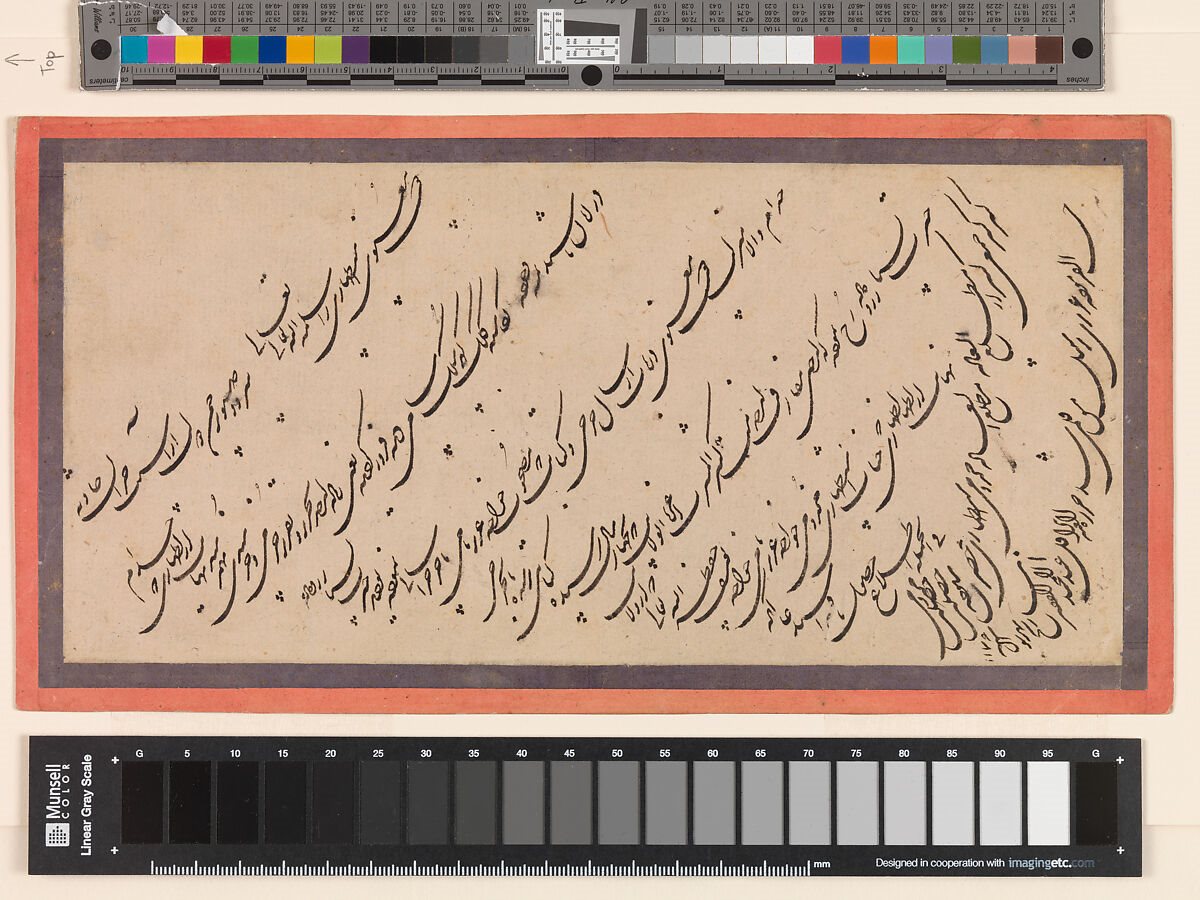
For a vessel, consider how the decoration relates to the rim, handle, or pouring edge. For a manuscript, examine the relationship between margins, writing, and painted areas. Describe one visible detail to a companion without using the words beautiful or intricate. Naming a color change, a repeated shape, or the position of a figure usually produces a more useful conversation.
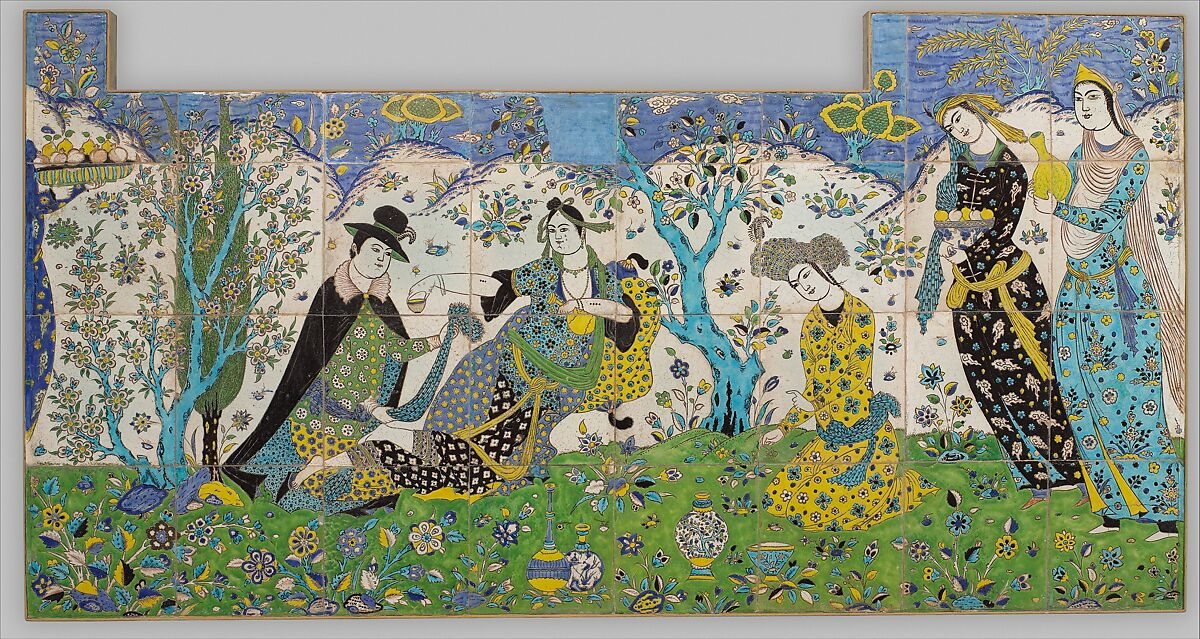
Garden Gathering, dated 1640–50 and attributed to Iran, probably Isfahan, offers a vivid counterpoint to a manuscript or prayer niche. The panel is made from stonepaste tiles with polychrome glazing in the cuerda seca technique. At its center, a woman holds a cup while a kneeling figure wears European clothing and a hat; the museum cautiously suggests he may be a merchant. Other figures bring refreshments or converse. The panel measures roughly a meter high and nearly two meters wide, so the social scene unfolds across a substantial architectural surface.
This is a useful example of why the collection's title should not be read as a promise that every work is devotional. Clothing, hospitality, and imagined sociability are also subjects here. Notice the joints between individual tiles: the composition had to work both as a continuous picture and as an arrangement of ceramic units. The object record marks its photographs Public Domain, making it a particularly accessible work to revisit in detail after the trip. Source
Head to The Met Fifth Avenue at 1000 Fifth Avenue, Manhattan. As checked on November 13, 2026, general adult admission is $30; children twelve and under enter free. New York State residents and eligible New York, New Jersey, and Connecticut students have pay-what-you-wish admission, subject to the museum's identification requirements. Step-free entrances are at 81st Street and Fifth Avenue and through the parking garage at 80th Street. Use the official visit page to confirm current hours, eligibility, and gallery closures. Save the collection records for two or three objects you especially want to see, then check whether they are on view. A page's presence in the online catalog alone does not establish display status.
Allow room to abandon your planned route when an unexpected object holds your attention. Photograph its label if permitted, record the accession number, and return to the online entry later. That small number is more reliable than searching for “blue bowl at the Met.”
For families, end with each person choosing one object they would like to understand better. The next step might be a drawing, a library book, or another museum visit. The strongest souvenir is often a question precise enough to follow.
How carpet exhibitions, collectors' gifts, manuscript acquisitions, and changing gallery installations shaped the Met's Islamic collection.