 History
Ahmed Zewail: making chemical change observable
How a Caltech laboratory opened a window onto molecular motion, and why instruments and collaboration matter to the story.
A West African scholar and military leader, his wife Isabella, and the struggle to leave slavery.
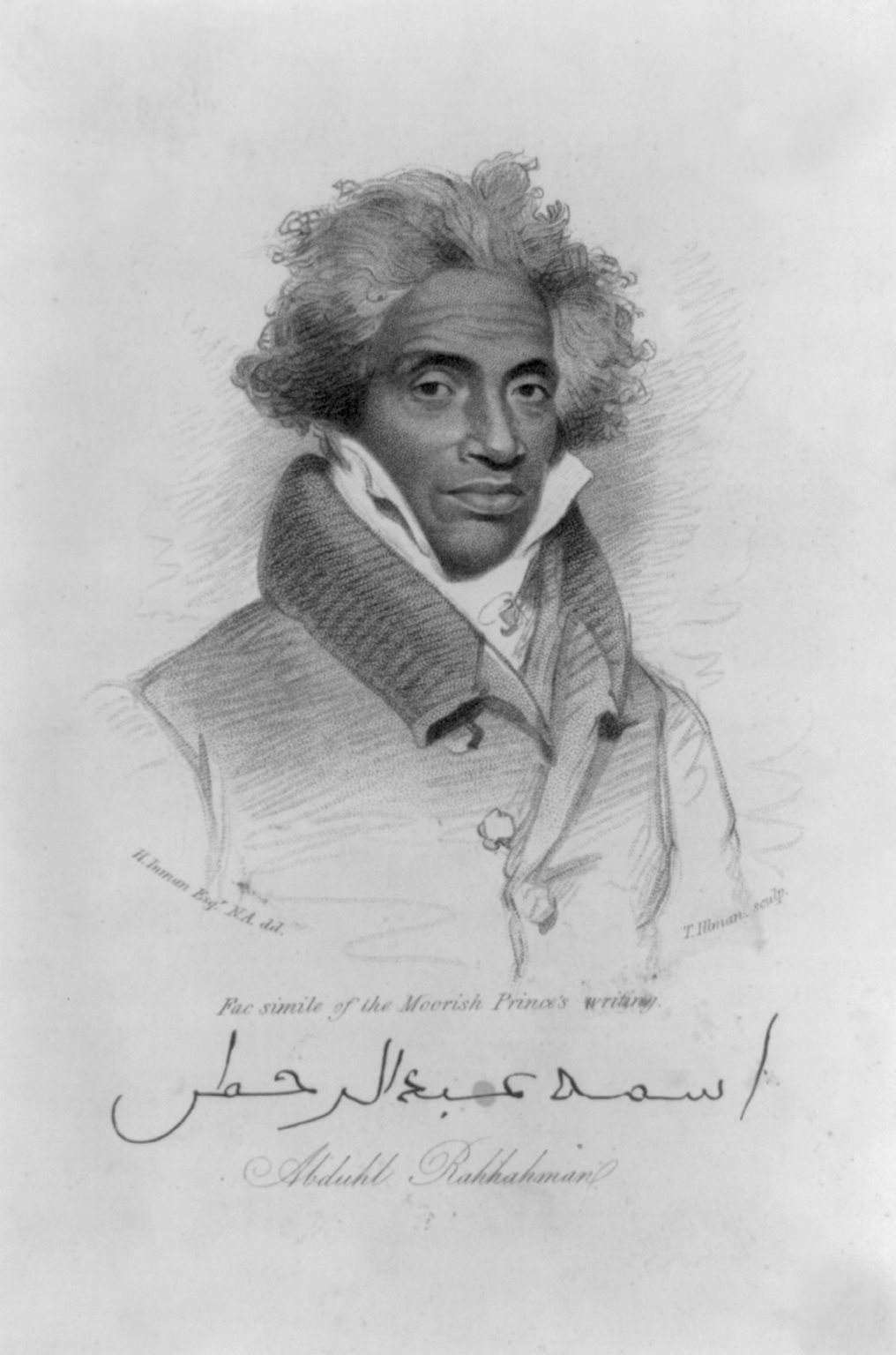
When Abdul Rahman Ibrahima arrived in Natchez in 1788, his education and family status offered no protection from sale. Thomas Foster purchased him and another captive in a transaction recorded with the language of property. Ibrahima would remain enslaved in Mississippi for approximately forty years. His eventual freedom depended on a remarkable combination of his own persistence, local supporters, Arabic correspondence, and international diplomacy.
Born in 1762 into a ruling family of Futa Jallon, in present-day Guinea, Ibrahima had studied in West African centers of Islamic learning. He knew Arabic and several regional languages, and received military training. Captured during conflict, he was carried into the Atlantic slave trade. The Lowcountry Digital History Initiative places his American experience within this earlier intellectual and political life.
The City of Natchez's historical account records Foster's purchase of the two men for $930. Such a figure makes the system's violence tangible: an educated adult with a family, homeland, and history became an entry in someone else's financial transaction.
Ibrahima resisted his new circumstances, including an early period of flight into the woods. He eventually returned. Remaining on the plantation did not mean accepting the identity imposed upon him. His Arabic writing and recollections preserved connections to his former life.
He married Isabella, an enslaved Baptist woman. Their household joined people with different religious backgrounds under conditions neither had freely chosen. The family they built in Mississippi became central to his later decisions. Freedom could not be understood only as one man's release when his wife, children, and grandchildren remained vulnerable to sale and separation.
An encounter with John Coates Cox brought Ibrahima's earlier life into the knowledge of local white society. Cox had known his family in West Africa. Recognizing Ibrahima in Mississippi, he tried unsuccessfully to secure his freedom.
The episode is often told as the fortunate discovery of a hidden prince. Its more disturbing implication is that recognition did not end captivity. Knowing that Ibrahima had held high status elsewhere did not compel his enslaver to release him. The plantation economy valued his labor more than the justice of his claim.
The term “prince,” which followed him through American publicity, attracted attention but also narrowed the story. His suffering was not more serious because of royal ancestry. The title mattered historically because it influenced how influential Americans responded to him, revealing their fascination with exceptional status within a system that denied ordinary rights.
In the 1820s, Natchez newspaper editor Andrew Marschalk helped circulate Ibrahima's story. An Arabic letter passed through official channels and reached American representatives in Morocco. The resulting intervention involved Secretary of State Henry Clay and the administration of President John Quincy Adams.
The Mississippi Department of Archives and History account traces this correspondence and its consequences. Foster ultimately agreed to release Ibrahima on the condition that he leave the United States. That condition exposed the limits of the freedom being offered: release from ownership was tied to removal from the country where his family lived.
Supporters in Natchez raised money to obtain Isabella's freedom as well. The couple left the city in April 1828. Ibrahima then traveled to raise funds for relatives still enslaved. The campaign made him a public figure, but publicity did not solve the family's separation.
The couple sailed for Liberia in 1829. Some summaries confuse their 1828 departure from Natchez with their later transatlantic journey. Keeping the two departures separate makes the chronology clearer.
Liberia was on the African continent, but it was not Ibrahima's homeland. He intended to continue toward Futa Jallon. Illness intervened, and he died in 1829 before completing that journey. Isabella's experience and the descendants left in America are essential to the story, which cannot be closed neatly with the phrase “returned home.”
An 1828 newspaper account preserved by the National Humanities Center records information about the homeland he described. Read beside the Mississippi records, it reveals the distance between the life he remembered and the decades taken from him.
Ibrahima's history connects West African learning, Mississippi slavery, American diplomacy, and family survival. Its most powerful feature is not the improbability of a prince on a plantation. It is the persistence of a person whose language and memory crossed an ocean, and whose pursuit of freedom remained inseparable from the people he loved.
HistoryHow a Caltech laboratory opened a window onto molecular motion, and why instruments and collaboration matter to the story.
 History
A North Carolina research career reveals how basic science, teaching, and cultural exchange can reinforce one another.
A New Jersey congregation’s zoning dispute produced permission to build and changes to local religious-land-use procedures.