
Clara Muhammad and the schools that carried her name
The educational legacy of Clara Muhammad places Black Muslim institution-building within the history of American schooling.
A Berkeley college brought an explicitly Islamic liberal-arts curriculum into the American system of institutional accreditation.
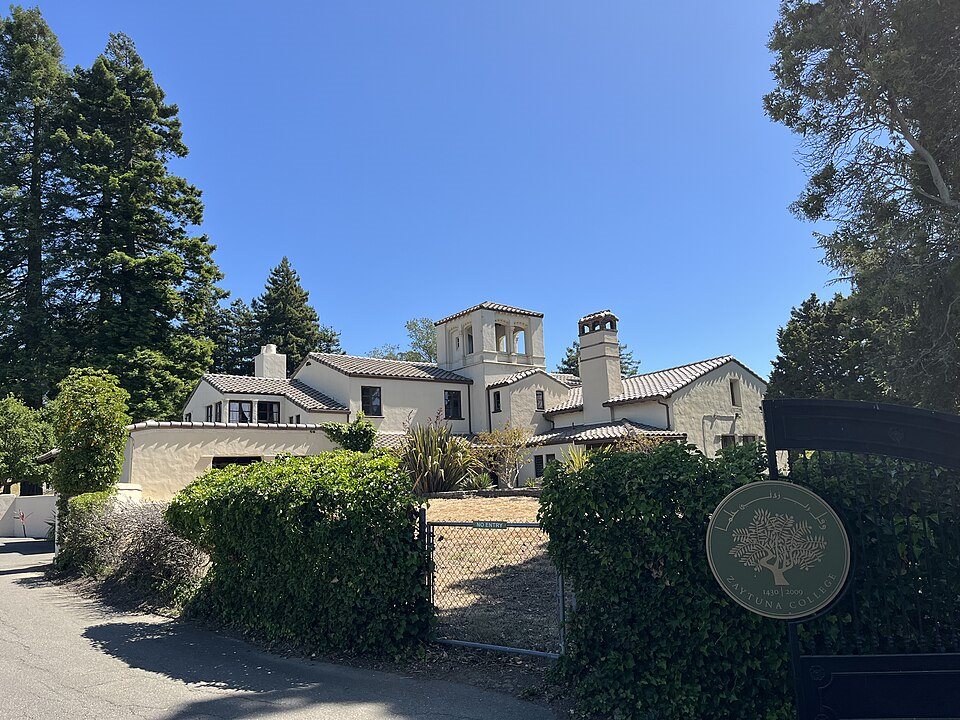
Zaytuna College offers a useful answer to a concrete question: what does it take for an Islamic college to participate in American higher education as a degree-granting liberal-arts institution? Its story involves a curriculum, a campus in Berkeley, and an external accreditation process. Those details make the contribution more precise than a general celebration of learning.
The college describes its educational project as bringing Islamic scholarly traditions into conversation with the liberal arts. The independent accreditor WSCUC lists Zaytuna as accredited and records 2015 as its first accreditation year. Read together, those two sources show both an institution’s stated purpose and an external recognition of its place within higher education.
According to Zaytuna’s institutional website, the college was founded in 2009 in Berkeley, California. Its bachelor’s program is in liberal and Islamic studies, and its graduate program concerns Islamic texts. Arabic has a substantial place in the undergraduate course of study.
The distinction between learning about a tradition and reading its texts in a source language helps explain the educational model. A translated passage and an original-language text offer different kinds of access. Requiring sustained language study makes that access part of the degree’s structure rather than an optional decoration.
At the same time, the college presents Islamic and Euro-American intellectual traditions as material for a liberal education. The interesting question is not whether the institution can attach the word Islamic to a familiar college format. It is how its selection of texts, languages, and disciplines defines what students are expected to study together.
The WSCUC institutional directory is the appropriate place to check accreditation rather than relying only on the college’s own description. The directory records the bachelor’s program as implemented in 2010 and the master’s program in 2018. It also lists a non-degree summer Arabic program.
Those dates describe different milestones. The founding of an institution, the beginning of instruction in a program, and accreditation are not interchangeable. Keeping them separate gives a clearer picture of how a college develops over time.
Accreditation is also not a ranking or a guarantee that one institution is the best choice for every student. Its relevance here is institutional: Zaytuna entered an external system of review used within American higher education. That makes the college’s educational project legible beyond its own supporters.
For prospective students, the directory is a starting point, not the whole decision. Degree requirements, transfer arrangements, financial obligations, and the suitability of a curriculum still need their own examination. A college’s distinctive mission may be exactly what one applicant seeks and different from what another needs.
The college’s undergraduate application page describes an application assembled from transcripts, recommendations, an essay, and other materials. At the time of review, it also asked for community-service experience. These requirements are worth reading because they reveal the kinds of preparation the institution asks applicants to demonstrate.
The service component connects the idea of education with participation beyond a classroom. It is a stated expectation, not evidence that every graduate has produced a particular social outcome. A careful account can describe what the institution asks for without inventing a measurement of what all its students later do.
Application dates and requirements can change. Readers considering enrollment should use the current official pages rather than treating a historical feature as an admissions checklist. The durable part of the story is the educational model and its development, not a deadline from one application season.
A college can reach people who are not enrolled in a degree. Zaytuna’s public-facing work includes online learning, a book club, and the journal Renovatio. These provide ways for readers to encounter the institution’s intellectual interests without enrolling in the bachelor’s or master’s program.
That matters to a guide about Muslim life in America. The institution is not only a place where students receive instruction; it is also a producer and organizer of public discussion. The value of a particular lecture or essay must be assessed on its merits, but the availability of such material expands the points of entry into its educational work.
For a first encounter, choose one public essay or lecture and compare its subject with the degree curriculum. That provides a more informative introduction than relying on a promotional slogan or a photograph of the campus.
Zaytuna does not stand for all Muslim American education. Public universities, community colleges, private schools, student associations, and family learning have different purposes. The college’s contribution is distinctive: a sustained institution presenting an explicitly Islamic liberal-arts education within an accredited American setting.
Read it alongside Clara Muhammad’s educational legacy and the Islamic Scholarship Fund. One story concerns school-building, another a college curriculum, and another support for students entering selected professions. The education collection shows how those approaches can be understood together without pretending they are the same.
The educational legacy of Clara Muhammad places Black Muslim institution-building within the history of American schooling.
 Culture
Five stories connect Black Muslim schools, campus organizing, an accredited college, scholarships, and classroom education.
ING’s classroom programs made public education a practical route for Muslim Americans to address misunderstanding.