
 History
Muslims who helped shape American science and technology
Five stories connect laboratories, skyscrapers, space exploration, and computing through the work of Muslim American scientists and engineers.
A Massachusetts research and business story about facial analysis, context, consent, and the limits of technological claims.
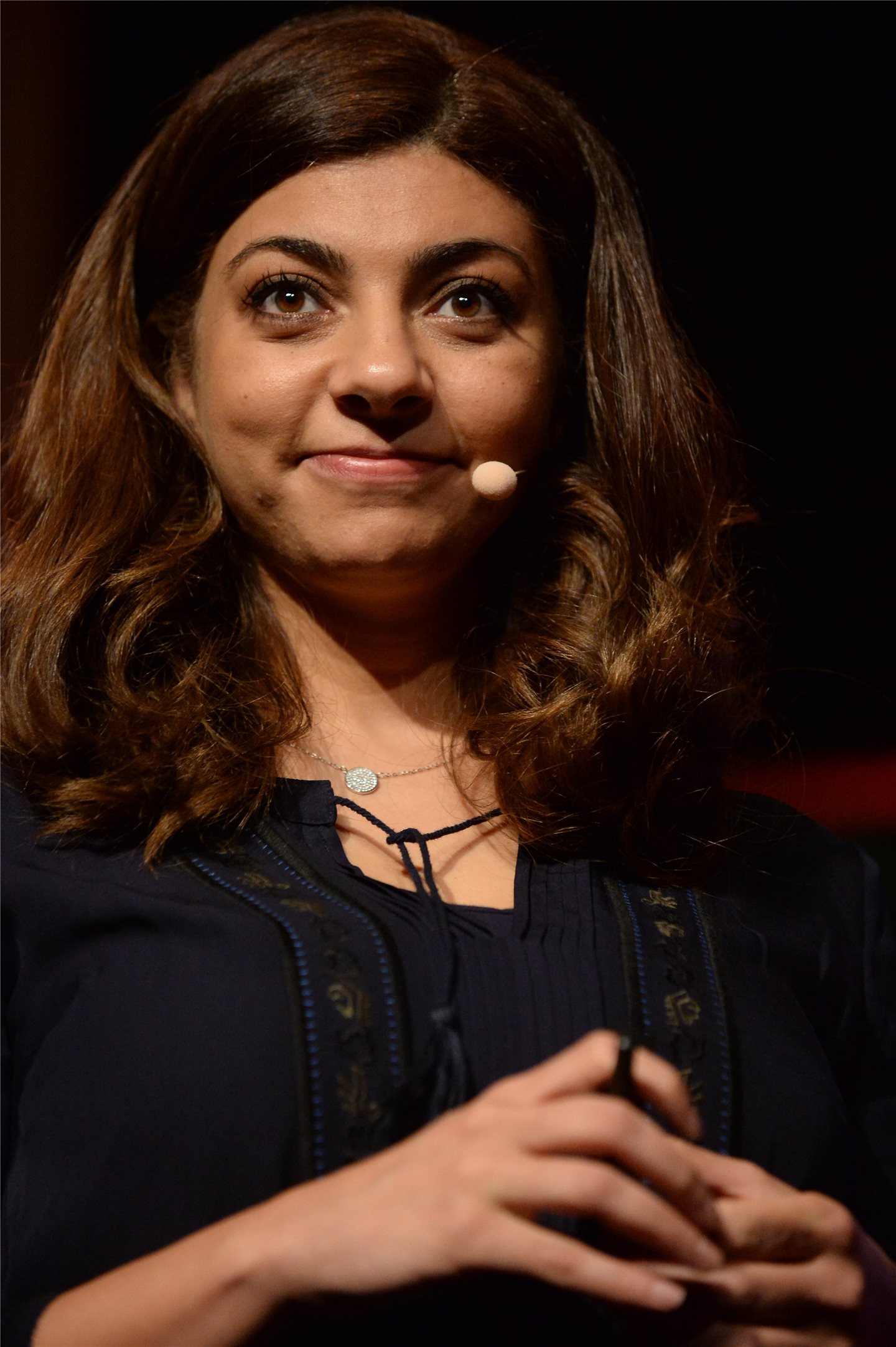
Rana el Kaliouby's career connects the MIT Media Lab with a consequential question about computing: what should a machine infer from a human face? She co-founded Affectiva with Rosalind Picard in 2009, translating research in affective computing into a company. The work became part of a Massachusetts technology sector interested in how machines might respond to people beyond typed commands.
The contribution deserves a careful account. Detecting a facial movement is different from knowing someone's feelings, intentions, or truthfulness. A profile can recognize scientific and entrepreneurial work while examining that distinction. Indeed, one of el Kaliouby's own co-authored research papers makes context central to the problem.
MIT's 2014 account traces her work from doctoral research at Cambridge to the Media Lab in 2006. There she worked with Picard, whose earlier work helped establish affective computing as a field. Early projects included research associated with autism and a wearable prototype designed to provide feedback about facial expressions.
The group later shifted toward cloud-based software and founded Affectiva. MIT describes the university's venture mentors helping the founders explain a product's value to potential users. That change—from demonstrating technology to identifying a use for it—is an important part of the company story.
A laboratory prototype and a commercial product answer different questions. A prototype may show that an approach is possible under particular conditions. A product must also address users, costs, reliability, and the circumstances in which its output will be interpreted. None of those steps automatically follows from an interesting demonstration.
The MIT account describes Affdex software tracking facial cues, including movements around the eyes, eyebrows, and mouth, during research involving advertisements. The company's system aggregated responses for clients. Those descriptions document what the company was doing and claiming at that time; they should not be read as independent validation of every inference.
The distinction between a recorded signal and its meaning is essential. A camera can register a change in a face. Calling that change confusion, attention, or enjoyment adds interpretation. The same expression may have different meanings depending on the person, the setting, and what happened just before it.
A historical profile should therefore avoid the familiar but misleading phrase that a machine can read minds. Facial-analysis systems produce measurements and estimates. Their usefulness depends on the task and the evidence supporting the interpretation.
In 2009, Mohammed Ehsan Hoque, el Kaliouby, and Picard published research on disagreements in labeling facial affect. MIT's repository records a study using video from an intelligent tutoring application. The authors compared judgments made with more context against judgments based on short clips.
Their reported findings emphasized the importance of familiarity and contextual information. Agreement was substantially weaker when observers labeled brief excerpts. This is a revealing source to place beside publicity about emotion-recognition products: the research itself identifies a difficulty that promotional shorthand can conceal.
The lesson is methodological rather than simply favorable or unfavorable to a particular company. If the label used to train or evaluate a system is uncertain, the meaning of a reported accuracy score needs scrutiny. Researchers must decide what counts as the answer before measuring how often a model matches it.
MIT Sloan's 2019 explanation describes Affectiva's advertising-research process as using participants' consent and limiting client uses, including restrictions concerning surveillance and lie detection. These were reported company practices at that date, not an independent audit or a guarantee about every later deployment.
They nevertheless identify concrete governance questions. Who agrees to be analyzed? What are they told? Can an output be used for another purpose? What happens when a system is applied outside the setting in which it was studied?
Those questions belong in an account of technological contribution. Responsible design involves boundaries around a tool as well as improvement of the tool itself. A commercial success is not, on its own, evidence that all possible uses are beneficial.
El Kaliouby's public website presents her as an Egyptian American scientist and explicitly as a Muslim leader. Her memoir, Girl Decoded, offers her own narrative of becoming a researcher and company founder. This is direct public identification, not an inference from her name or national background.
The site also records Affectiva's acquisition by Smart Eye in 2021. That event belongs to the business history, while the earlier MIT sources explain the research and company development. Keeping the dates visible prevents descriptions of a startup in 2014 from being mistaken for a current corporate profile.
Her story widens this collection beyond retrospective awards. It includes a field whose scientific interpretation and social uses demand continuing scrutiny. Read Ahmed Zewail's story alongside it: both concern making phenomena measurable, but they also show why the meaning of a measurement must be explained rather than assumed.
HistoryFive stories connect laboratories, skyscrapers, space exploration, and computing through the work of Muslim American scientists and engineers.