 History
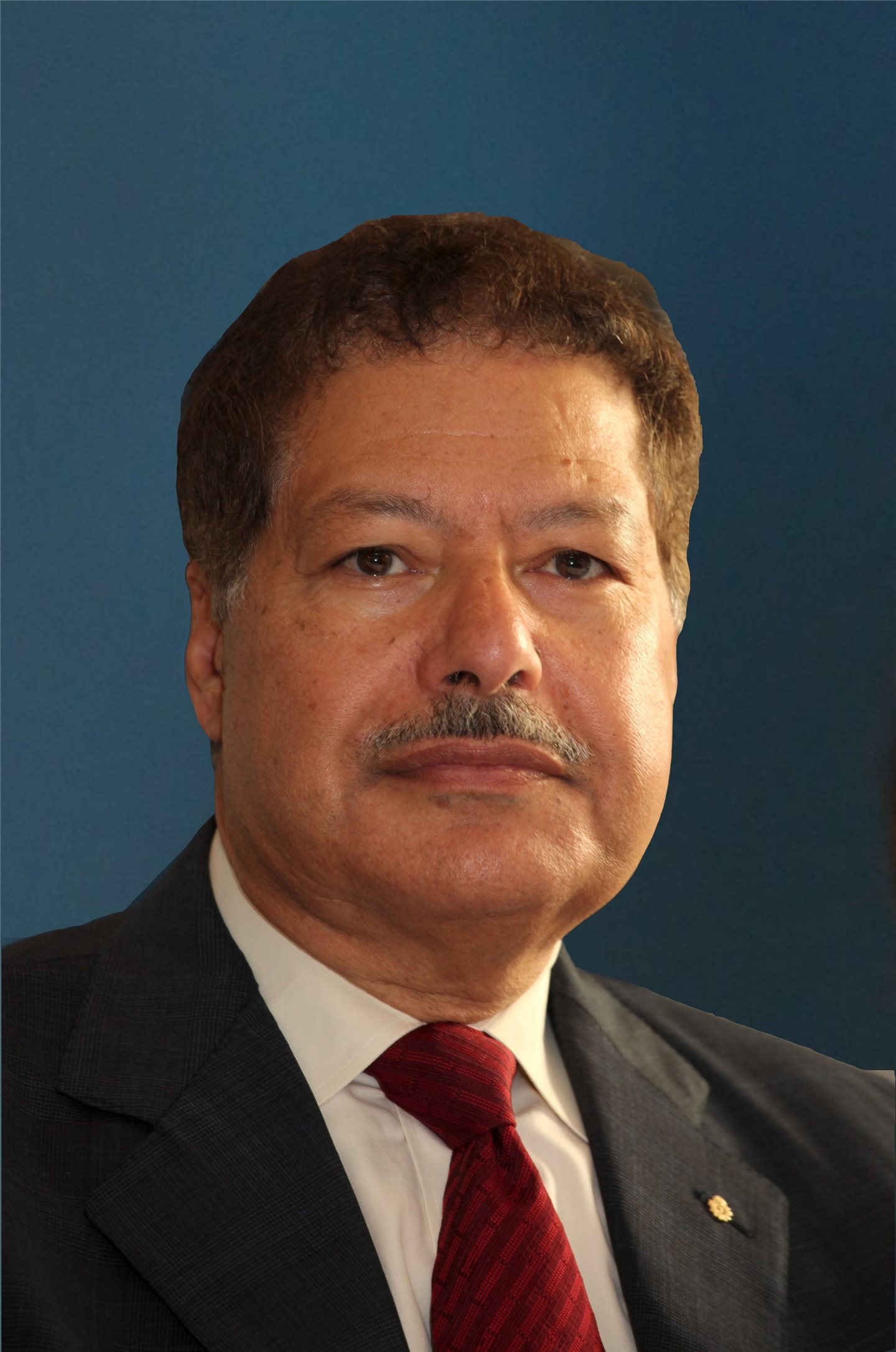
Ahmed Zewail: making chemical change observable
How a Caltech laboratory opened a window onto molecular motion, and why instruments and collaboration matter to the story.
Holt v. Hobbs tested whether a prison could justify denying one Muslim prisoner a limited religious accommodation.
The disputed beard was half an inch long. That small measurement sits at the center of Holt v. Hobbs, a 2015 Supreme Court case about how a prison must justify a restriction on religious practice. Gregory Holt, also known as Abdul Maalik Muhammad, sought permission to grow it in accordance with his Muslim faith. Arkansas prison officials refused.
The Court unanimously held that the refusal violated the Religious Land Use and Institutionalized Persons Act, usually abbreviated RLUIPA. The decision did not depend on admiration for the prisoner. Its significance lies in the treatment of a legal protection that applies to institutionalized people, including people whose conduct the public condemns.
The Supreme Court’s opinion identifies Holt as a Muslim and describes his request for a half-inch beard as a compromise. The Arkansas Department of Correction generally prohibited beards, although a medical exception permitted one-quarter-inch facial hair.
The distinction between Holt’s broader religious preference and the limited accommodation he requested mattered. The Court was examining the refusal of this particular half-inch beard, rather than announcing a rule about every possible length or every institutional setting.
A reader can lose that distinction in a headline about prisoners and religious freedom. It is worth keeping the measurement in view throughout the story. The question was whether the department could support the specific restriction it imposed on this specific request.
RLUIPA required more than a general statement that prison security was important. Once the relevant burden on religious exercise was established, the government had to justify that burden through a compelling interest pursued by the least restrictive means.
In ordinary language, the department needed to explain why its objective required denying this accommodation and why workable alternatives would not suffice. Security remained a serious concern. The Court did not require prisons to abandon it. It required officials to connect their stated concern to the restriction being defended.
That structure is central to understanding the ruling. A religious-liberty case can be misread as a contest between faith and public safety, with one side necessarily defeating the other. Here the legal test asked whether the government could protect safety while imposing a smaller burden.
The department offered two main concerns: concealing contraband and identifying prisoners. The Court examined each rather than accepting the word security as a complete answer.
On contraband, the opinion considered how little could be hidden in a half-inch beard and compared the restriction with the department’s treatment of hair on the head. Searching or combing a short beard was an alternative relevant to the analysis. On identification, the Court considered photographs showing the prisoner both with and without a beard.
The department’s existing medical exception also required explanation. An institution claiming that a categorical rule was necessary already permitted some prisoners to depart from it. That did not automatically settle the case, but it made the reasons for distinguishing the religious request more important.
The Court also considered the practices of other prison systems. Arkansas did not have to copy another jurisdiction simply because it used a different policy. It did, however, need to address why less restrictive approaches would not work in its circumstances.
On January 20, 2015, the Supreme Court reversed the lower appellate judgment and sent the case back for further proceedings. Justice Samuel Alito wrote the opinion. The ACLU’s case record, which includes its supporting brief, records the unanimous result.
The separate concurrences help clarify what unanimity did and did not mean. Justice Sonia Sotomayor emphasized the importance of considering officials’ explanations in context. Justice Ruth Bader Ginsburg, joined by Sotomayor, noted that this accommodation did not harm other people who did not share the petitioner’s faith.
Those observations resist a simplistic account in which courts must always accept, or always reject, the institutional explanation. The task was an examination of the evidence and alternatives under a particular statute.
The contribution to American legal life was a concrete demonstration of how a religious-liberty standard must be applied. The principle did not become available only to Muslims, and the opinion did not ask whether all Muslims understood facial hair in the same way. It addressed the claimant’s religious exercise and the government’s justification.
That is important to Muslim Folk’s approach. A history article can explain a legal dispute without issuing a religious ruling. It can also identify a consequential case without turning its plaintiff into a general role model. The useful question here is what the litigation clarified about institutional power.
Readers comparing this case with Samantha Elauf’s hiring dispute will find different statutes, settings, and legal questions. RLUIPA governed Holt’s claim; Title VII governed Elauf’s. They belong together in the civil-rights collection because both show Muslim litigants bringing practical questions into the courts—and because the resulting decisions must be understood in their actual terms.
HistoryHow a Caltech laboratory opened a window onto molecular motion, and why instruments and collaboration matter to the story.
 History
A North Carolina research career reveals how basic science, teaching, and cultural exchange can reinforce one another.
A New Jersey congregation’s zoning dispute produced permission to build and changes to local religious-land-use procedures.