 Community
Ayub Ommaya: a neurosurgical invention and the research around it
The history of the Ommaya reservoir places a Pakistani American surgeon within NIH research, collaboration, and medical-device development.
Explore a neurosurgical invention, neighborhood clinics, mental-health institutions, and medical volunteering through five documented stories.
CommunityThe history of the Ommaya reservoir places a Pakistani American surgeon within NIH research, collaboration, and medical-device development.
A clinic that began at Detroit’s Muslim Center shows how a local institution can connect volunteers, professional care, and neighborhood needs.
From a 1967 meeting in Ohio to domestic disaster response, IMANA’s history shows the organizational work behind medical volunteering.
Professional care, research, and education show how Muslim mental-health work has developed beyond a single conversation about stigma.
 Community
How Muslim medical students helped build a neighborhood healthcare organization, and why its history extends beyond a founding moment.
Healthcare becomes real at several scales. A scientist or surgeon may devise a tool. A clinic may make an appointment possible. A professional network may organize volunteers after an emergency. A research and training institution may help clinicians understand experiences that a general system has overlooked.
Muslim American contributions appear across those scales. This collection follows five examples: Ayub Ommaya's neurosurgical work, UMMA Health in Los Angeles, HUDA Clinic in Detroit, Khalil Center's mental-health infrastructure, and the Islamic Medical Association of North America. Each has a distinct history and a different kind of evidence.
The purpose is to make the work understandable, not to rank providers or recommend a treatment. A profile of a clinic is a history of an institution, while current services, eligibility, and appointment arrangements belong with the provider's own information.
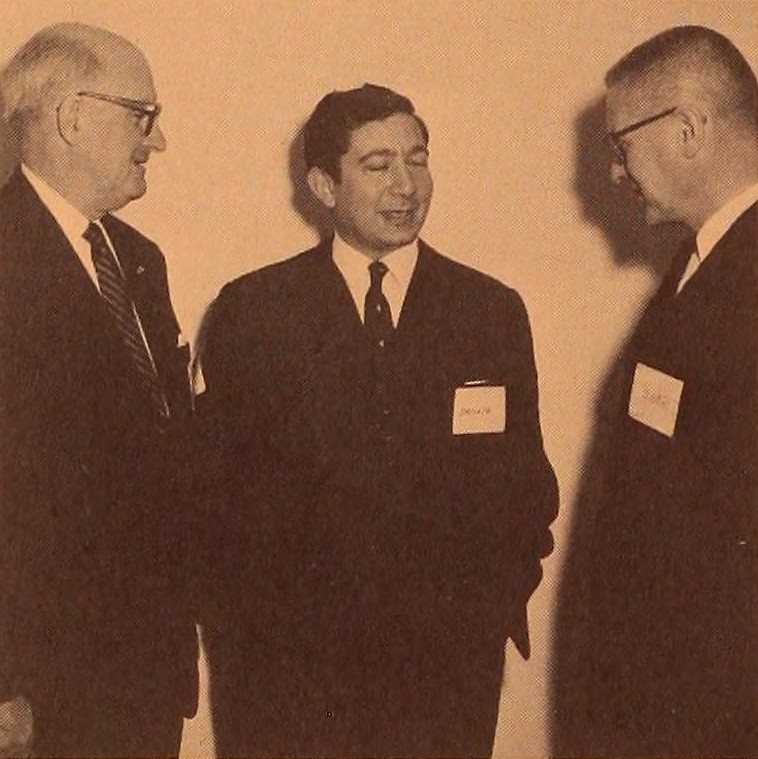
Ayub Ommaya's story begins with a small device developed at the National Institutes of Health. The reservoir bearing his name offered repeated access to cerebrospinal fluid through an implanted system. Its first published description appeared in 1963.
The profile places that invention within research and collaboration in Bethesda. It also distinguishes a device from a drug and an initial report from later evaluation. Medical innovation is a sequence of questions, not merely the moment an inventor names an object.
Ommaya's other collaborations connect him with imaging and intervention. His biography includes training before his arrival in the United States and a documented relationship with the Sufi tradition of Islam.
This story offers a route into American medical history through an object that may be familiar in a hospital while its inventor's life remains largely unknown outside the profession.
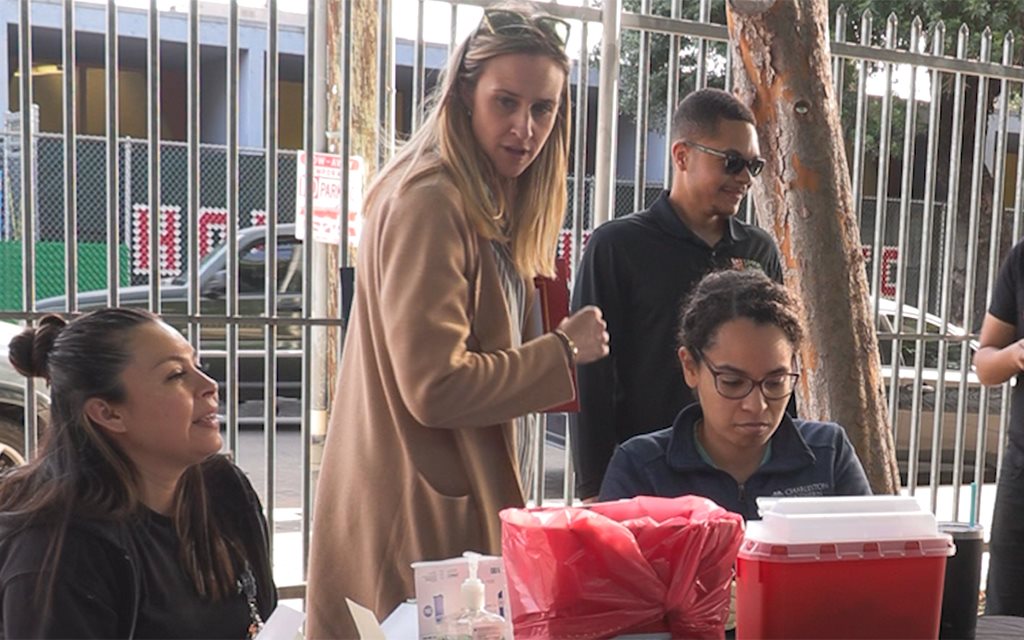
UMMA Health's story follows Muslim medical students at UCLA and Charles R. Drew University who organized after the 1992 Los Angeles unrest. The first patient arrived in 1996, after years of preparation.
The profile gives that preparation its place: equipment, money, construction, and volunteers had to come together. It then follows the organization's continuing life rather than ending at the opening ceremony.
UMMA's public record and a regional health-center coalition describe recurring care, referrals, and medical training. Independent reporting supplies details of volunteering and the barriers residents face when trying to use services.
This history shows an institution founded through Muslim organizing and serving a broader neighborhood. Its contribution lies in access and continuity, as well as in any one clinical encounter.
HUDA Clinic's story begins in 2004 at the Muslim Center of Detroit. Its later move to a larger building accompanied an expansion beyond its initial medical services.
The profile considers primary care alongside dental, vision, mental-health, and other services described by the organization. It also examines why a free consultation is only one part of access: tests, medications, and referrals may form further steps.
The Institute for Social Policy and Understanding studied HUDA in 2016 as part of research on Muslim institutions and their relationships with surrounding communities. That gives the clinic a place in a wider discussion of how community spaces can support public service.
HUDA and UMMA should be read together without being treated as duplicates. Their founding settings differ, as do their institutional paths. The comparison reveals more than one way to organize care.
Khalil Center's story looks at clinical services, professional education, and research associated with Muslim mental health and Islamic psychology. Its public materials identify professional qualifications and separate several kinds of service.
The article pays particular attention to a work-in-progress research forum and participation in scholarly publication. Those activities show a field developing places to question methods and exchange ideas.
Related work at Stanford's Muslim Mental Health and Islamic Psychology Lab offers a separate campus example. The institutions are not merged into one organization, and their stated aims are not presented as proof of universal treatment outcomes.
The subject extends beyond a generic discussion of stigma. It includes clinicians, research methods, student services, and professional training: the less visible structures that help a field of practice develop.
IMANA's story starts at a 1967 meeting in Columbus, Ohio. The association's later history includes a professional publication, education, and medical service.
Its own domestic-response record includes support after Hurricane Katrina, assistance connected with counseling after Sandy Hook, and work in United States territories. These activities are attributed to the organization rather than treated as an independently audited total of impact.
The profile also explains the operational side of volunteering: credentials, preparation, selection for particular needs, and local partnerships. A professional network can help connect willingness to serve with the structures needed to do so responsibly.
This national scale complements the neighborhood focus of UMMA and HUDA. A clinic provides a continuing local institution; an association can connect people across locations and mobilize different forms of support.
Taken together, these stories make several kinds of labor visible. There is clinical work, but also teaching, maintenance, administration, fundraising, research, and coordination. A healthcare institution depends on more than its most recognizable professional.
That does not mean every role is the same. A volunteer organizing supplies and a licensed clinician have different responsibilities. A research finding, a service offered, and a patient outcome are different kinds of evidence. Keeping those distinctions clear makes the contribution more concrete rather than less meaningful.
The collection also keeps patients in view as people with circumstances and choices. Neighborhoods are not simply settings in which an organization demonstrates generosity. The usefulness of care depends on whether it can connect with the people it is intended to serve.
Readers interested in laboratory research can continue to science and technology, particularly the account of DNA repair at UNC. Readers interested in community institutions can compare the Detroit and Los Angeles profiles with the site's city coverage.
These five stories are examples rather than a census of Muslim healthcare workers or organizations. Their value comes from specificity: an implanted device, a student-organized clinic, a Detroit community space, a research forum, and a professional association meeting in Ohio. They show how contribution becomes visible through actual institutions and work, while leaving room for the many people whose histories still need to be documented.
CommunityThe history of the Ommaya reservoir places a Pakistani American surgeon within NIH research, collaboration, and medical-device development.
A clinic that began at Detroit’s Muslim Center shows how a local institution can connect volunteers, professional care, and neighborhood needs.
From a 1967 meeting in Ohio to domestic disaster response, IMANA’s history shows the organizational work behind medical volunteering.