
 Community
Muslim contributions to healthcare in America
Explore a neurosurgical invention, neighborhood clinics, mental-health institutions, and medical volunteering through five documented stories.
The history of the Ommaya reservoir places a Pakistani American surgeon within NIH research, collaboration, and medical-device development.
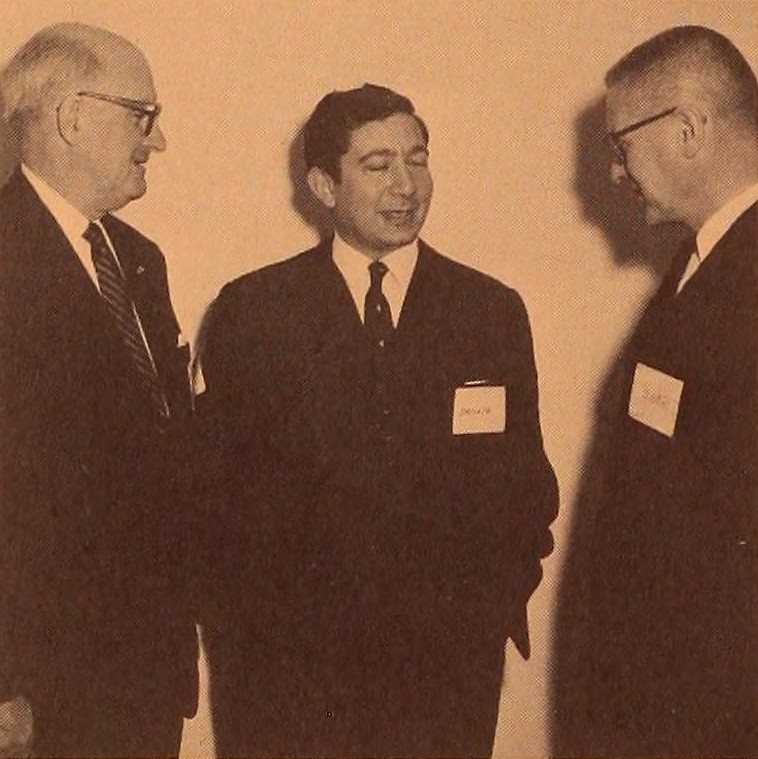
A small implanted device can preserve a name in everyday medical language long after the inventor's biography becomes unfamiliar. The Ommaya reservoir is one such device. Named for neurosurgeon Ayub Khan Ommaya, it offered clinicians repeated access to cerebrospinal fluid through an implanted reservoir and catheter.
Its history belongs to the National Institutes of Health in Bethesda, Maryland, where Ommaya worked in the Surgical Neurology Branch. It is a story about a practical clinical problem, an inventive response, and the work needed to evaluate that response. This article concerns medical history, not instructions for using a device or choosing treatment.
A history written by members of the Surgical Neurology Branch identifies Ommaya's arrival in 1960. It describes a research environment in which neurosurgeons worked with laboratory scientists and other clinical specialists. The institution's purpose joined investigation with patient care.
That setting is important to the invention. A device does not become medicine merely because its shape is ingenious. Clinicians need to understand the problem it addresses, the situations in which it might help, and the complications that can accompany it. A research hospital provides one setting in which those questions can be studied together.
Ommaya's career also illustrates how American medicine drew on training abroad. A later Journal of Medical Biography article records his education at King Edward Medical College in Lahore and further training at Oxford before his American work. His skills did not begin when he arrived at an American institution.
The NIH history dates the first published description to 1963. The reservoir made repeated sampling and administration through an implanted access system possible, reducing the need for repeated lumbar or cisternal punctures for those purposes. The initial report concerned patients with cryptococcal meningitis.
That original setting is worth remembering. A device may acquire uses beyond the problem that first prompted it. Later familiarity can obscure the initial clinical question and make development appear more direct than it was.
The name also contains an important limit: a reservoir is an access device, not a medicine. Its existence should not be confused with the effectiveness of a particular drug or with a guarantee that a procedure is appropriate for a particular patient. Separating the tool from the treatment gives a more accurate account of the contribution.
The later medical biography discusses a study of sixty patients with reservoir implantation during the 1960s. It reports device complications as well as the intended uses. Those findings belong in the history even when they complicate a celebratory account.
An early complication rate should not be treated as a current estimate for patients. Technology, placement methods, clinical selection, and follow-up practices can change. Conversely, a modern use does not erase the uncertainty that researchers faced while developing the method.
This distinction makes medical-device history different from a simple list of inventions. The first description is one event. Testing, revision, clinical adoption, and continuing evaluation are others. The achievement includes learning about limitations, not merely announcing a new object.
The NIH account places Ommaya among collaborators in spinal angiography and early interventional neuroradiology, including John Doppman and Giovanni Di Chiro. It also describes work with Godfrey Hounsfield and colleagues on the resolution of computed tomography.
These examples widen the picture from a named reservoir to relationships among imaging, anatomy, and intervention. They also make credit more precise. Ommaya participated in several developments with other specialists; he did not independently invent every technique mentioned in his biography.
A named device can make a person unusually visible while hiding the people around him. The institutional history is useful because it restores a research branch, colleagues, and a sequence of projects to the narrative. It invites readers to see a workplace as well as an inventor.
The Journal of Medical Biography account explicitly describes Ommaya's connection to the Sufi tradition of Islam. It also records his interest in singing and his training as a tenor. These details establish a fuller person than the technical name found in a medical chart.
Religion is included here because it is documented, not because his Pakistani background makes it safe to assume. At the same time, a biographical connection should not be turned into a claim that a particular religious tradition scientifically produced the device.
The distinction leaves space for several parts of a life: professional judgment, research, artistic interests, and spiritual identity. A history of Muslim American contributions can acknowledge all of them without requiring a single explanatory formula.
The strongest starting point is the NIH-authored institutional history, followed by the later biography and its references to original publications. Read the original purpose of the reservoir separately from later uses, and keep historical outcomes attached to their dates.
Ommaya's story also connects with Aziz Sancar's laboratory research. One concerns access and instruments in clinical practice; the other concerns molecular mechanisms. Both show why medicine's history includes several kinds of contribution, and why progress is better understood through specific work than through sweeping claims about saving countless lives.
CommunityExplore a neurosurgical invention, neighborhood clinics, mental-health institutions, and medical volunteering through five documented stories.